
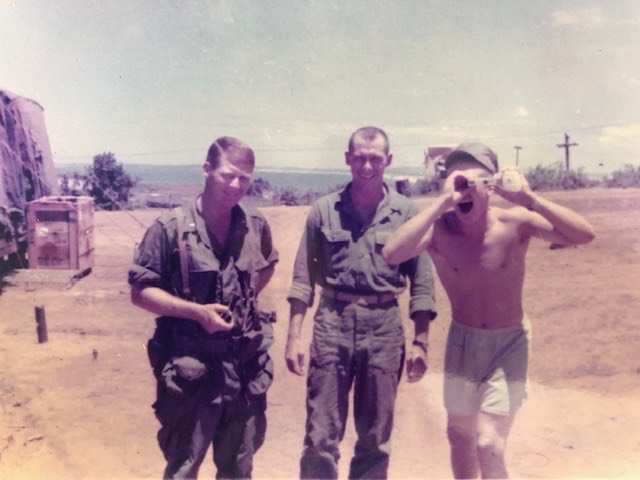
James Kirschke (middle) with fellow lieutenants Roger Pullis (left) and Jim Anderson (right).
Chu Lai, Vietnam, 1966.
When Buddy Spivey was wheeled into my room on the twelfth deck of the Sick Officers Quarters at the Philadelphia Naval Hospital in 1967, all I could see through the open port between us was the outline of a body under a bed sheet. I didn’t know his name or how he’d been injured or where. I knew only that he lay very still and silent.
Soon after, I heard he was in a coma and not expected to survive. When I finally learned his name, I realized I’d seen him before. It was back in 1965 at Camp Pendleton, where I was a First Lieutenant training with the First Marine Division in preparation for shipping out to Vietnam. I’d been heading out for a run one morning and happened to see a fellow lieutenant standing outside the TOQ, talking to another officer about the Arkansas Razorbacks. He had his thumbs tucked under his belt loops and spoke in a twang that bounced like a rubber ball.
I had hardly gotten to know him back then nor had I seen him again until he appeared in my hospital room. It wasn’t unusual in those days to see a man during training and never see him again, never know whether he’d been killed or wounded somewhere in-country. Nor was it unusual to see someone fighting beside you in the field be wounded and flown out and to never know his fate. Casualties came and went, but the important business, the immediate electrifying concern in the war zone, was always with the current moment.
As Buddy lay in a coma, I, too, was struggling to survive. In January 1967, after ten months leading platoons through the badlands up near the DMZ, I’d been gravely wounded by a landmine. I had lost both my legs to amputations, had sustained other serious wounds and was just this side of dead when they shipped my eighty-five pounds of skin and bones back home. It would be the start of fourteen months of recovery at USNH, where five roommates would come into my life and leave again.
As was the case on a ward like ours, young men were fighting to survive not just their injuries but the disappointments, regrets, and fears that came with being disabled for life. Sticking together and helping each other pull through made all the difference. Buddy was the one who helped me the most in that grueling and uncertain time. And he would go on to be a source of inspiration to me through the rest of my life.
*
When I finally got a good look at him in those days after he arrived, I saw that his face was so swollen his eyes couldn’t have opened if he’d wanted them to, and under the white sheet that covered him where one of his legs should have been, was a place as flat as an arctic plain. His dressings, like mine, were often red with blood. No, I thought. His chances weren’t good. But if I had survived, maybe Buddy would.
One day, a Methodist minister came in and prayed over Buddy’s bed, hugging him and imploring God to heal him. The next morning, Buddy woke up. Whether it was luck or fate or divine intervention, I couldn’t have said. But conscious he was, as evidenced by a string of loud cussing. The nurse who’d come in on her morning rounds whirled around and yelled, “Buddy Spivey, did you say that?” In reply, Buddy let out another barrage of twangy cusses, putting all doubt to rest.
The first sensible words he uttered came a few days later when he replied to my usual “Good morning” with “Who are you?” Then he asked where he was. “In a hospital in South Philadelphia,” I said. “You were wounded in Vietnam.” He pondered that before setting off on another rant of swearing. I would soon learn he had quite a repertoire.
Over the next week, it became clear that the loss of his leg was not the only injury Buddy had suffered. He’d also been blinded in the explosion. A bitter, ironic loss since, as I would soon learn, he’d been an artist before joining the Corps. I would also discover he’d loved dancing—he had appeared on the American Bandstand television show as a teen—a pleasure he would never have again.
“I used to dress to the nines,” he told me about his Bandstand experience.
“Then maybe you should be called Spiffy instead of Spivey,” I said.
As our conversations became less rudimentary, we slowly got to know each other. On days when neither Buddy nor I had to go downstairs to have x-rays, presurgical preps, wound debridement, or PT, I was often able to help him in small ways. I almost always read him the next day’s menus. It was typical uninspiring hospital chow, delivered on the food cart our corpsmen called the “Roach Coach,” but it did provide us with lots of laughs about what appeared on our dinner trays.
A sense of humor, dark though it sometimes could be, helped keep us going in those days, and we never missed a chance to laugh together. Once, after Buddy’s parents picked out a pair of good loafers for him—one of which he would never wear—he suggested I get a pair for myself, forgetting for the moment that I had no feet. I paused dramatically and said, “Buddy, I don’t have to worry about that anymore.” We both roared so loud that a corpsman looked in to see what was up.
In between the brief rounds of laughter we knew plenty of pain. For me, as well as for other amputees, wound debridement was particularly harrowing. I would be placed in a water tank where whirlpool jets swirled viciously around my open, raw wounds to eradicate dead skin. During these torturous sessions, I could do nothing but hold onto the edge of the tank and howl in pain. Then there were the exhausting rounds of surgeries and grueling physical therapy sessions.
Held in the hospital basement, the physical therapy sessions came after we had been fitted with our prostheses and were learning to walk again. In them, the therapists practiced fall and recovery techniques. The patient would stand on a mat with his leg(s) on, balanced on his crutches, and a therapist would come up from behind and kick the crutches out from under him. Then the therapist would loudly harass the grounded amputee until he was able to recover the crutches and struggle upright, or not.
I had sat sidelined in many of these sessions even though I had often asked when my chance would come to practice—I badly wanted to try to walk on my heavy, awkward prosthetics. “We’ll get to you later,” the therapists would say. But they never did. Over time I came to understand why. They didn’t believe I would walk again, so why bother?
*
At some point during my long stay at USNH, my primary physician for most of the previous year, Dr. Leo Willett, presented me with the official evidence for my medical retirement. Willett had been Senior Naval Surgeon at the hospital, which, until it was demolished, was the amputee center for the East Coast. He had deep experience in trauma care.
We wheeled just outside the room, and he delivered his report in clear New England diction: the copious units of whole blood I’d required after being blown up, the loss of my entire left leg and half of my right, the shrapnel wounds to my lower back and left hand, the nerve damage to my remaining half leg. He ended his formal report by stating that my spine had degenerated considerably.
“You’re twenty-six now, right?” he said. “You now have the spinal cord of an eighty-year-old man.”
I swallowed that news and asked, “How far do you think I can walk with my prostheses and crutches?”
He gazed down the twenty-yard hallway. “Possibly to the end of this corridor.”
Twenty yards with two very uncomfortable leg prosthetics? What good would that be? I would need to have my wheelchair with me at all times.
I thought back to my days in South Philly, the long runs I made around the neighborhood and then up Broad Street to LaSalle College when I became a student there. I had always been a kid full of restless energy, and running was a way to burn it off. But it wasn’t just a means to an end. Running had been programmed into my DNA like my blue eyes and freckles. It was primal, and it quenched me in a way that even now I can’t entirely describe.
What would I do now when I couldn’t even walk?
When I got back into the room, dejected, Buddy asked me how I was feeling. It was clear he’d heard my discussion with the doctor. “Don’t you worry, Jim,” he twanged with certainty. “You’re as strong as any man I know, and nothin’s gonna keep you down.”
That was Buddy, big-spirited, with a goodness of soul, always ready to offer support, despite his own challenges. Challenges that seemed to me tougher than my own.
*
While still a patient at the USNH, I decided to return to school for a master’s degree in English. To prepare for my GRE, I obtained a handbook of English vocabulary, which I often studied before I went down to physical therapy or other treatments.
One day when I was studying, Buddy asked me what I was doing. When I told him, he insisted that I quiz him on some of the words. With an alacrity that even now I find amazing, he provided correct answers. He did the same on several other occasions.
“I think you’re cheating,” I teased him. “I go downstairs, and you get the corpsman to give you the answers.” Decades later, we still joked about this.
One day, Buddy’s parents, Joe and Alma Spivey, arrived for a visit while he was in surgery. I was recovering from another surgery myself, so the visit was welcome. They had brought along some examples of Buddy’s artwork: colored landscapes, seascapes and lake views, and photographs of murals that Buddy had been commissioned to paint on buildings in Arkansas. Perhaps most impressive were the quarter-sized miniatures of Joe and of Alma that were tremendous likenesses of them. The art drove home to me just how much Buddy had lost along with his eyesight.
Sometimes, he talked about his days as a saxophonist with the marching band at the University of Arkansas, where he’d studied Fine Arts.
“You were in a marching band?” I asked, perhaps too incredulously, when he first mentioned it.
“What, you think I can’t play sax and put one foot in front of the other at the same time?” he teased. Then he said, “Oops, I guess I can’t do it anymore, can I?” After a moment, he told me that he’d had a great time traveling with the band. “Always had seats to watch the Hogs play some great football. Got to see ‘em play in the Big Sugar twice.” Big Sugar being his term for the Sugar Bowl.
*
One morning, a couple of male technicians crept in so quietly Buddy didn’t hear them. One of them held a long cord with a plug. The other carried what looked like a powerful spotlight about twenty inches in diameter. He held the big disc up not far from Buddy’s face while the other man plugged the cord into the wall. A brilliant light flashed on. It was clear they were testing him to see whether he would see the light.
After a minute or so with no response from Buddy, both men dolorously shook their heads and exited almost soundlessly from our room. “Yo, Jim. Was someone in here jes’ now?” Buddy asked. I took a deep breath and told him what had just happened. Thinking the techs were still in the room, Buddy cried, “I think I see it! I see it!!”
“No, Buddy,” I said. “They already left.”
After a moment, he said, “So, you think there are many jobs out there for blind artists?” As I was about to tear up in reply, he said, “I’m only kiddin’. When I get outta here, I’m goin’ back to school ‘n get me a useful degree, just like you.”
Buddy went far beyond what he said he would do. After discharge from his long hospital stay, he returned to the University of Arkansas, where he earned a master’s degree in Guidance and Counseling, followed by a specialist’s degree in education for people who had become seriously disabled after reaching adulthood. Along the way, he took courses in adult psychology.
Subsequently, he married, had a son and worked full-time as a field representative for the Blind Veterans Association, counseling disabled vets about how they could live better lives. For ten years, he travelled, mostly alone, to states in the US.
During this phase of his career, he once stayed at my suburban Philadelphia home for a long weekend. He arrived with a terrible illness, which we jokingly called “Swine Flu,” an allusion to his beloved Razorback Hogs. But despite being sick, Buddy was determined to give his scheduled lecture in Philadelphia. He invited me to attend, so I drove him to and from the session in my specially-adapted car.
An audience of about sixty blind vets was gathered in a packed room. Buddy, looking like Roy Orbison in his sunglasses and the dark hairpiece that hid his damaged scalp, introduced himself and explained where and by what he had been wounded in Vietnam, and some of the many ways he had been disabled. “Well, now that you know a bit ‘bout me, and some of my disabilities, let’s hear from some of you,” he said after he had spoken. “How’d y’all become disabled? And what are some of the problems being blind have caused you?”
For a few long moments, no one said a word. “Oh, I understand,” Buddy said in the disarming way he had. “Ya’ll don’t have any problems. Ya just came here to listen to me tell you ‘bout mine.” Finally, a middle-aged man, also wearing dark sunglasses and holding a cane, stood up and introduced himself. “Well, now that I am blind, when I go out to supper with my wife and children, the waiter or waitress always asks my wife, and sometimes even my children, what I would like to eat. They hardly ever ask me directly anymore. And when they address me directly, they talk to me like I’m a toddler.”
Eventually, the others in the room came alive with questions and comments, back and forth and all around. The session ran a half hour beyond the two-hour period, no one left early, and the entire room remained riveted by Buddy’s insightful and humorous replies. At the end of the session, almost everyone made their way to the front of the room to thank Buddy, and I saw how far my friend had come from our days in the hospital—how far both of us had come from those desperate days of seeing only emptiness in the future.
For me, it was the master’s degree I’d started in the hospital and then a PhD, both from Temple University. By the time Buddy came to visit, I was teaching at Villanova University, a job I had fought hard to secure. As I discovered after earning my academic degrees, getting the paper was only one of many grueling challenges. Finding a job in a cultural climate still stewing after a divisive war and often still hostile to vets, able-bodied and disabled alike, proved nearly impossible, especially in academia. But somehow Buddy and I had managed, through mutual support and otherwise, to forge ahead, to marry and have families, and find fulfilling work.
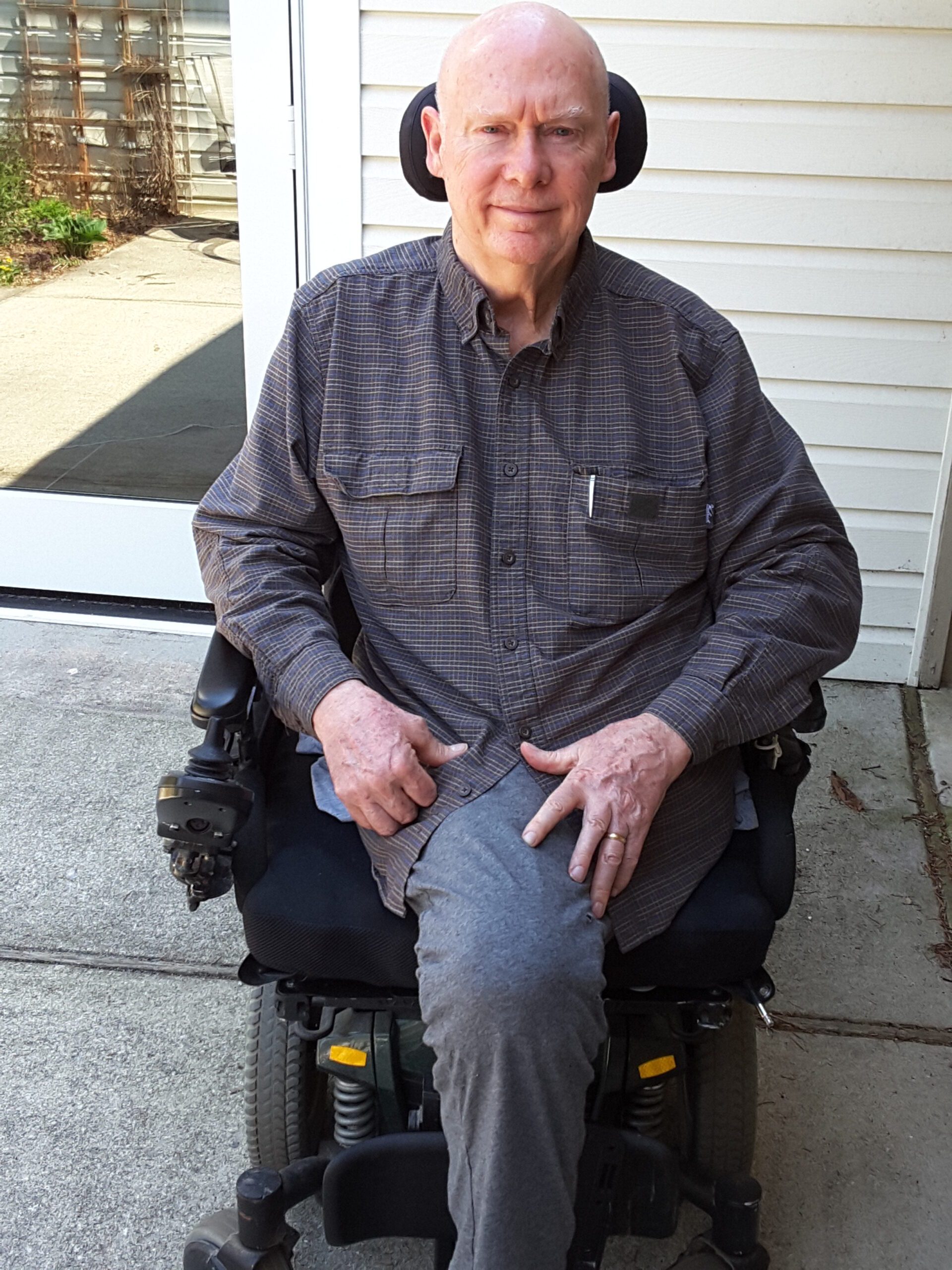
*
Buddy hardly ever said a word to me about his Vietnam service, in which he earned the rank of Captain along with two Bronze Stars and two Purple Hearts. But I learned a great deal about this at a Marine Corps reunion we attended in Philadelphia one year. Through listening to some of his conversations with the Marines he had served with, I was impressed by the fondness and respect shown to him by the Staff Non-Commissioned Officers from his unit. People who know Marine Corps Staff NCOs understand that they tend to be sparing with praise for officers.
Retired from counseling jobs in 2007, Buddy went on to work as a psychologist and social worker at the VA Hospital in Little Rock, Arkansas. He also served as an active member of the Disabled American Veterans Association.
In 1975, Buddy very rightly received the DAV’s Outstanding Veteran of the Year Award. In the same year, he was awarded the DAV’s Department of Arkansas Achievement Award, and in 1977, U.S. Congressman John P. Hammerschmidt presented Buddy with the “No Greater Love Award” for the numerous charitable deeds he had performed. He went on to win numerous other awards from various organizations.
Throughout his life, Buddy sported an easy affability and compassion that drew others to him, and a willingness to listen to the details of other peoples’ lives. I was lucky to have him as a roommate and a friend, to benefit from his support and camaraderie, and when he died in 2014, I felt a hole in my life had opened that wouldn’t be filled. I can still hear the usual sign-off, whether in person or over the telephone, that he always left me with during our five decades of friendship and which was the last thing I ever heard him say: “I Love Ya’, Jim.”
I love you too, Buddy. I always will.
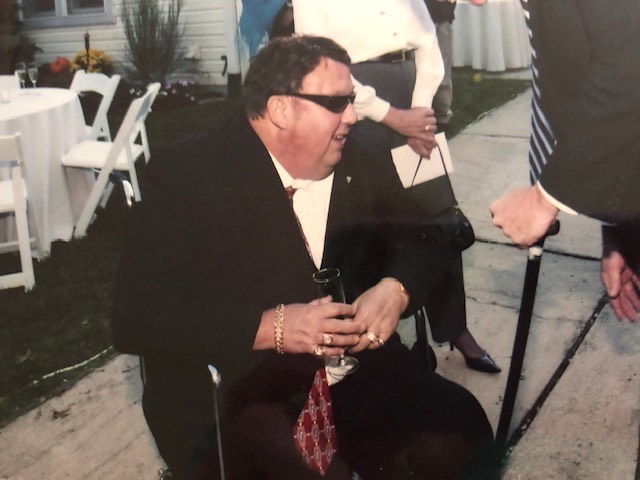 Buddy Spivey
James J. Kirschke
James J. Kirschke is a medically retired Marine Capt. who led first a mortar platoon and then a rifle platoon through some of the most disputed areas of the Vietnam War in 1966-67. He was gravely wounded by a landmine in January 1967. A retired English professor at Villanova University who grew up in South Philadelphia, he is the author of four books, including Not Going Home Alone: A Marine's Story, published in 2001 by Ballantine Books/Random House. The book chronicles Kirschke's time in the combat zone. He lives in Paoli, Pennsylvania, with his wife, a novelist.


BRAVO !!! my friend
Buddy sounds lie a person I would have loved to have met in life. Thanks Jim, for introducing us thru your essay.
Your Friend, Tom Ricci
Beautiful story about a friendship forged in pain and anguish, hope and humor.
What a moving remembrance of an amazing and inspiring man. Actually of two amazing and inspiring men–you AND Buddy.
Thank you for this beautiful memory shared here. A story of love, tenacity, and unbreakable friendship. This account had me in tears. A teacher told me that nothing is put in front of us that we can’t handle. Both you and Buddy are a testament to rising above… like a Phoenix.