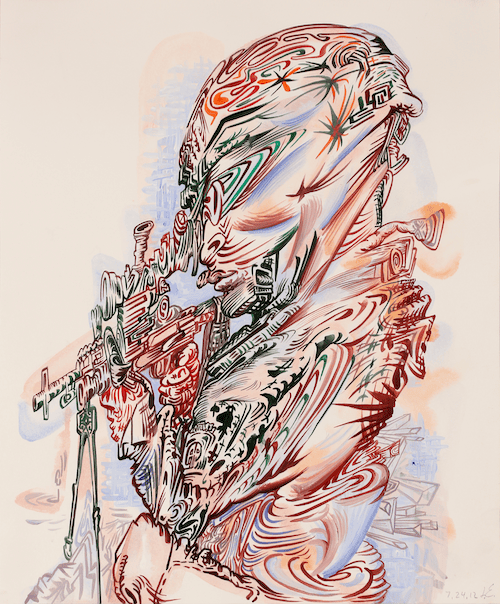
I first met James Esber in 1991 when we both were visual arts fellows at The Fine Arts Work Center in Provincetown. He and his wife—the painter Jane Fine—and I became fast friends and as it turned out, lifelong ones.
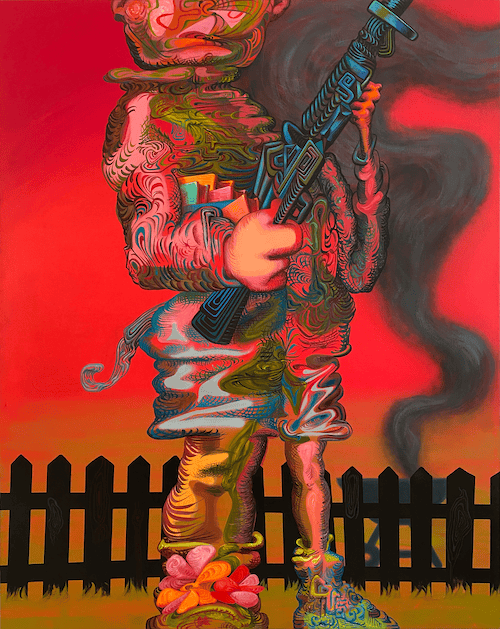
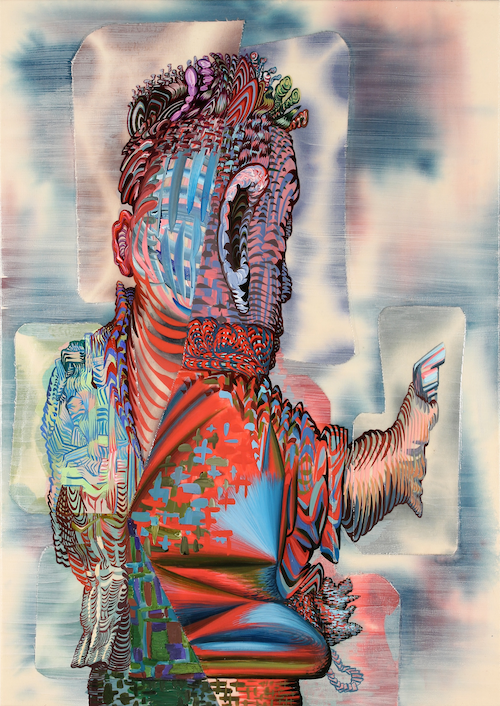
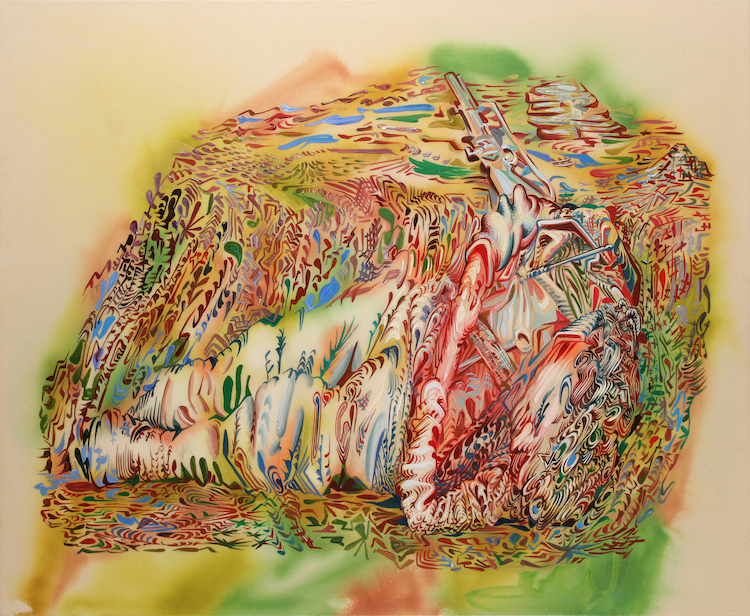
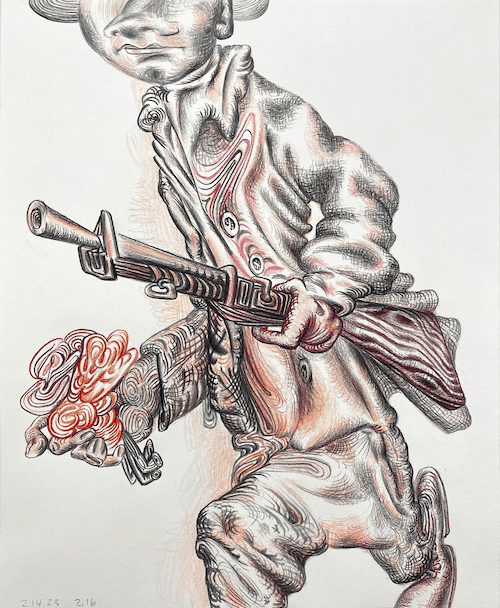
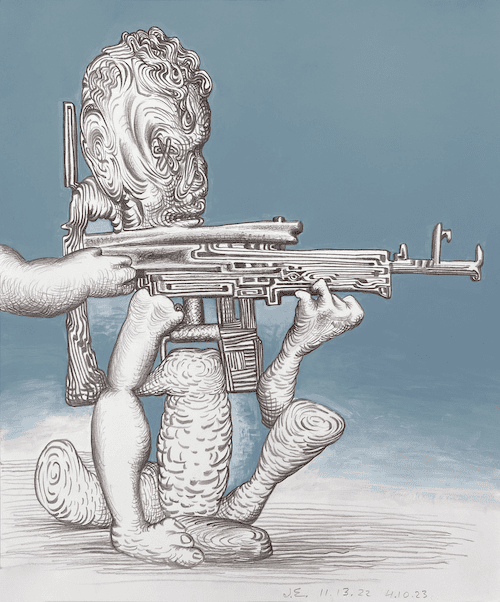
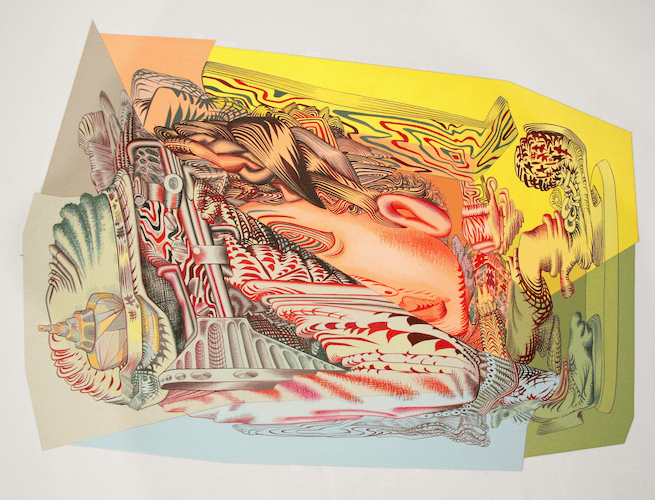
Back then I was immediately drawn to Esber’s work by the unfettered appropriation of images he took from mainstream media sources: history books, TV, newspapers, and magazines. From his perspective, these photos were ubiquitous in American culture and fodder for creating paintings that had an indirect yet palpable link to the Vietnam War. During the ’80s and well into the ’90s, many visual artists were grappling with the idea of what was considered original art—what images belonged to whom, what could be appropriated for use in one’s art, along with other such notions of authorship and provenance. Before the advent of Photoshop, artists were well along their way in hijacking imagery from media culture and inserting it into new, challenging, and often political works.
Born in Cleveland in 1961, Esber was too young to have been drafted into the war or to have had—until at least the ’70s—any cogent understanding of America’s murky rationale for being a participant in a far distant war in Southeast Asia. While older than Esber by a few years—and Canadian—I too experienced the Vietnam War through the osmosis of a child. Magazines like Time, Newsweek, and Life arrived weekly in my home, providing gory, unimaginable images of a war somewhere in Other-land, somewhere Not-Here, and mostly in color. The grainy black and white TV news footage my parents watched each night along with their indecipherable, ominous talk of “what was going on over there”—all of it seeped into me as a kind of dark reality that was incoherent but was felt and very much in the air I breathed.
In our many conversations over the years, Esber has said that watching TV as a young boy was deeply influential to his future as a painter of images that were grounded in the tangled memories of (mostly) TV iconography from the late ’60s onward.
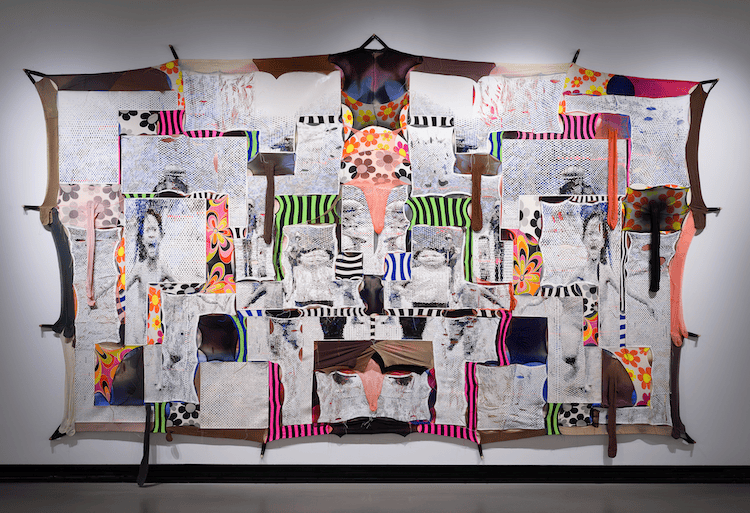
The photo Saigon Execution (1968) by Eddie Adams is known to many. It captured the summary execution of a suspected Viet Cong captain by a South Vietnamese officer. Equally famous is the iconic work by Nick Ut of Napalm Girl (1972). Both photographs were instrumental factors in furthering middle-class America’s skepticism at being engaged in what was appearing to be an endless and pointless war. These and many other photos from Vietnam planted seeds of distrust in a populace that was growing weary and cynical toward a government that was feeding a war machine with American lives.
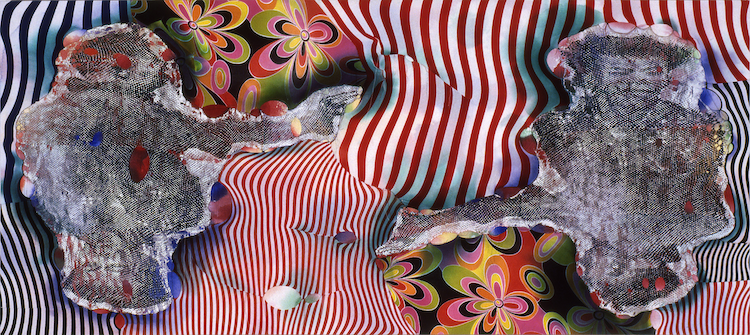
Esber’s massive Napalm painting, which spans sixteen feet across, was constructed in 1996 out of nylon hosiery, Lycra, psychedelic fabric, and acrylic paint. At that time and before he began using the computer for recycling found images, Esber was projecting photos (Kodachrome slides) onto nylon fabric, then painting the projected image, Ben-Day dots and all. The distortion that he effected—by pulling and stretching the nylon fabric so that the painted images became less legible while still recognizable—became a signature style in his subsequent work through the ’90s and beyond.