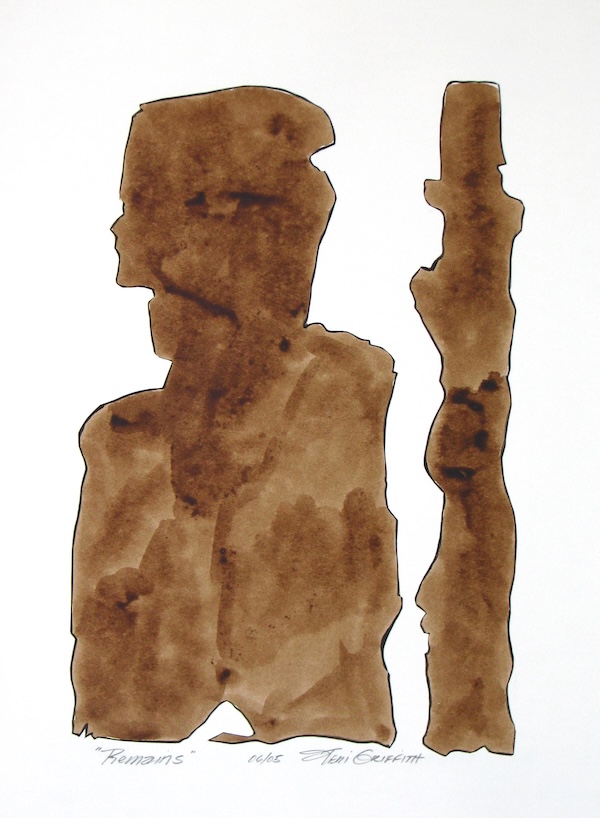
AS: Were there specific experiences in your life that first sparked your interest in the subject of war?
JG: As child of the 1960s growing up during the Vietnam conflict, I saw images of war on the network news every day. Although many adults in my environment supported that war, I did not. As a schoolgirl in a small Wisconsin town, I didn’t have many ways of expressing that opposition. The day after the Kent State shootings, when a few students chose to wear black armbands to class, we were asked to remove them.
For this body of work, you have chosen to work exclusively with black, brown, white, and grays. What do those tones represent to you? Do they have some symbolic resonance for you?
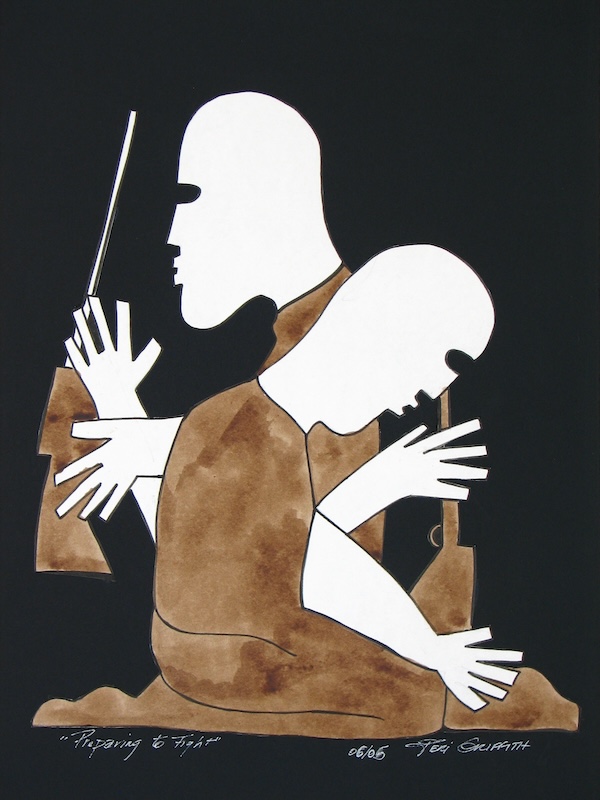
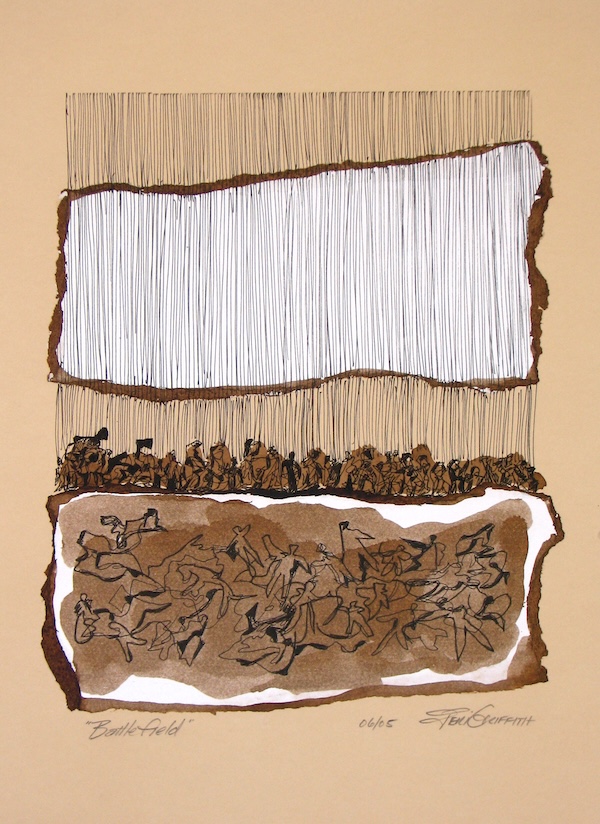
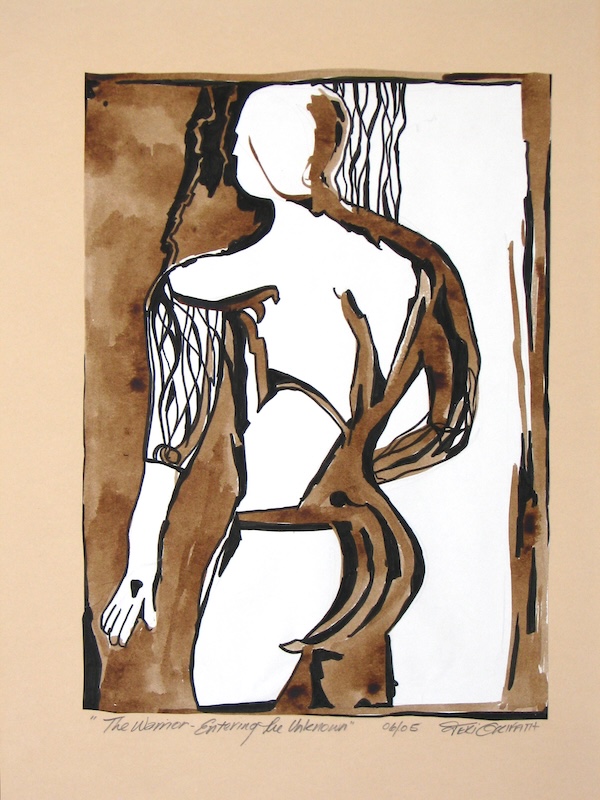
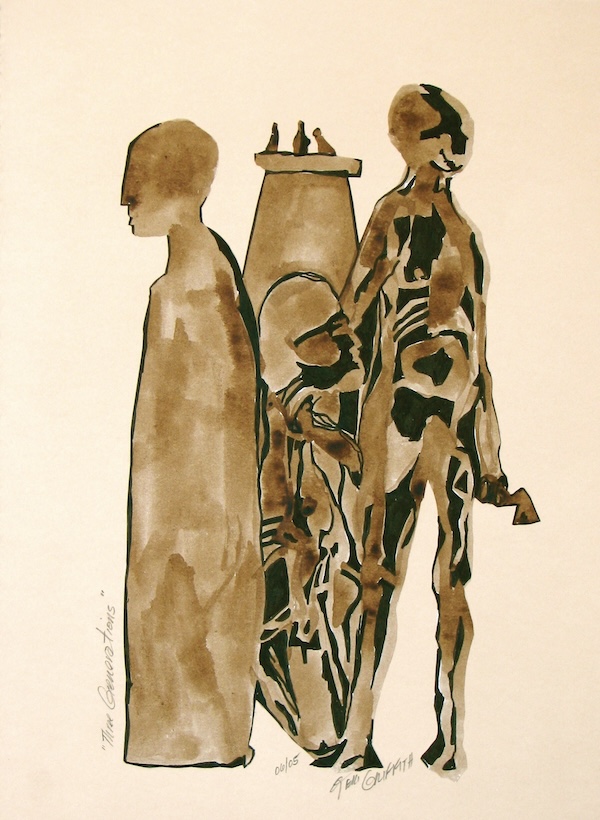
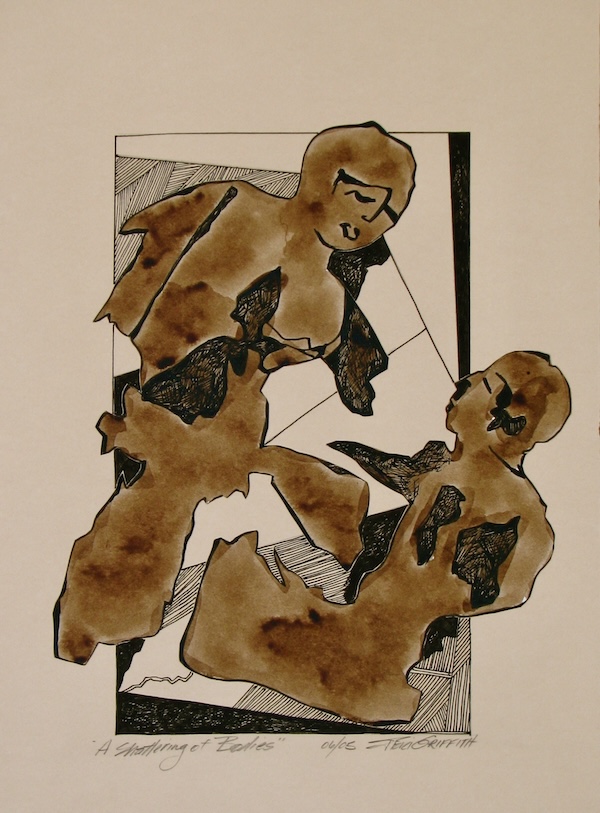
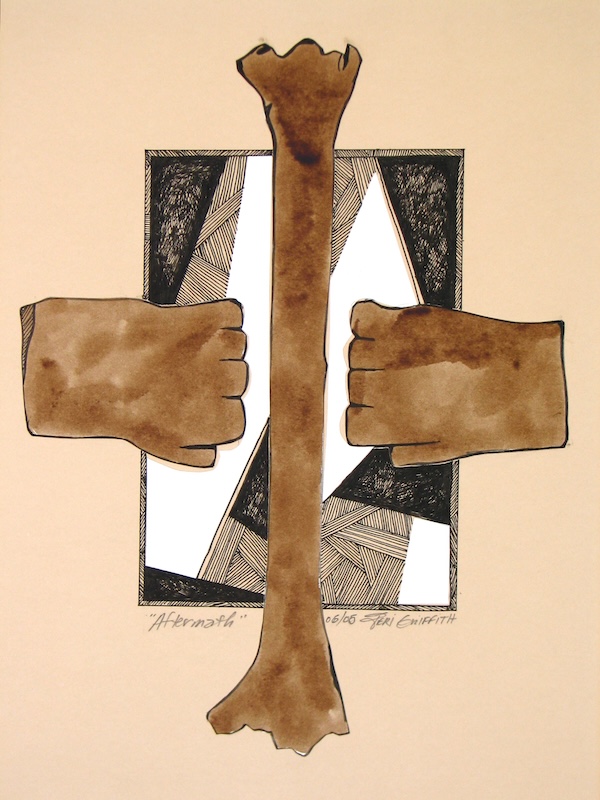
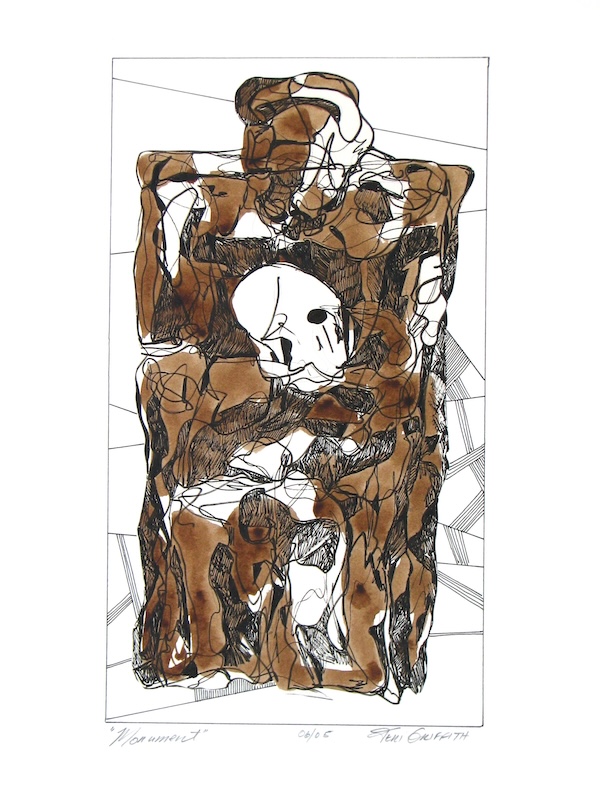
This limited palate simply felt to me that it had the right emotional tone. I could cope with my subject matter in a way that might not have been possible had I added color. For me, colors convey strong emotions. Here, I was trying to tone down emotion. I wanted to tell a story. I was essentially creating a requiem, a lament after the fact, a funeral dirge.
What mediums and techniques do you most often use, and how do they help convey the themes of war in your artwork?
When working with somber, serious subject matter, I generally choose to work out my images using pen and ink on paper.
How do you personally process the heaviness of the themes you work with?
I don’t think it’s possible for me to fully process a theme as dire as war. I haven’t experienced war. My work is a small attempt to understand those who have known war firsthand, those who literally carry it with them in their bodies.
Is your art a form of protest, catharsis, remembrance, or something else entirely?
In the case of The War Drawings, I would say it is catharsis as well as purification and a purging of feeling. Making the images helped me formalize feelings. It gave me a way to express what I felt.
What do you think is the artist’s role when it comes to documenting or commenting on war?
My thoughts about war have surely been impacted by unforgettable and iconic images etched into my mind forever. I might recall Robert Capa’s black-and-white photographs of the Spanish Civil War, Picasso’s Guernica mural, and Robert Motherwell’s series Elegy for the Spanish Republic, as well as stills and footage shared by war correspondents who covered the many conflicts happening around the world during my lifetime.
That said, for me, art is more than commentary or documentary. Art should send messages to the heart. My goal as an artist is to create harmony. If we were in the right relationship with ourselves, each other, and nature, wars would not happen. That kind of armed conflict would be unthinkable.